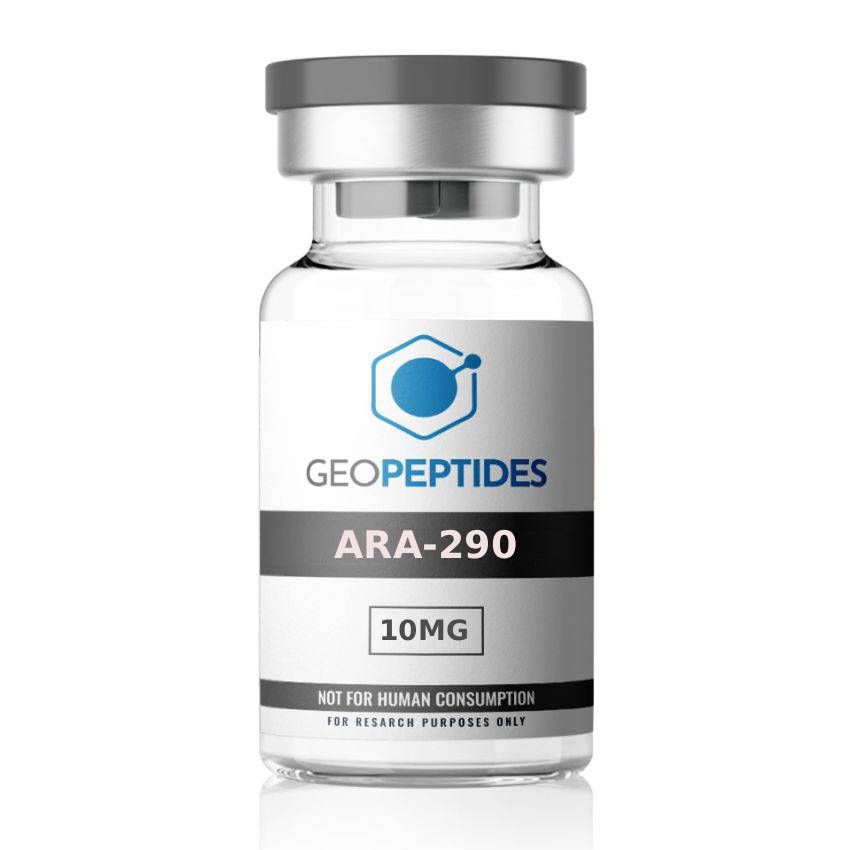
ARA-290 – High-Purity Research Peptide
ARA-290 is a synthetic peptide derived from erythropoietin (EPO) designed to target tissue-protective pathways without influencing erythropoiesis. It is widely studied for its potential effects on anti-inflammatory signaling, cellular repair, nerve function, and tissue regeneration. GeoPeptides supplies ARA-290 at ≥99% purity to support advanced laboratory and preclinical research.
Research Overview
ARA-290 interacts with the innate repair receptor (IRR), a receptor complex associated with tissue protection and inflammatory modulation. Unlike full erythropoietin, ARA-290 does not stimulate red blood cell production, making it a unique candidate for research into non-hematopoietic EPO pathways. Studies have explored its role in nerve regeneration, inflammatory response regulation, and cellular recovery processes.
Potential Research Benefits
- Tissue Protection – studied for its role in cellular defense and injury response.
- Anti-Inflammatory Activity – explored for modulation of inflammatory signaling pathways.
- Nerve Function Research – investigated for its potential involvement in nerve repair and regeneration.
- Cellular Recovery – examined for effects on tissue healing and regeneration models.
- Non-Erythropoietic Pathways – unique profile targeting EPO-derived pathways without red blood cell stimulation.
Why Researchers Choose GeoPeptides
GeoPeptides is committed to delivering high-purity, U.S.-manufactured peptides supported by strict quality control and third-party testing. Each vial of ARA-290 is verified for identity, purity, and consistency. With fast shipping, discreet packaging, and dependable support, GeoPeptides is a trusted source for precision research materials.
Product Details
- Compound: ARA-290
- Form: Lyophilized Powder
- Purity: ≥99%
- Appearance: White powder
- Packaging: 10mg vial
- Storage: Store at -20°C, protected from light and moisture
Scientific Applications
ARA-290 continues to be widely studied in models involving neuropathy, inflammation, tissue repair, and regenerative biology. Its selective targeting of tissue-protective receptors makes it a valuable compound for research into cellular resilience, injury recovery, and advanced therapeutic pathway exploration.
CAS & Technical Data
- CAS: 1208243-50-8
- Molecular Formula: C₅₁H₈₄N₁₆O₂₁
- Molecular Weight: 1257.4 g/mol
- Appearance: White to off-white powder